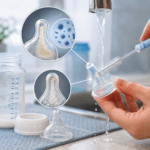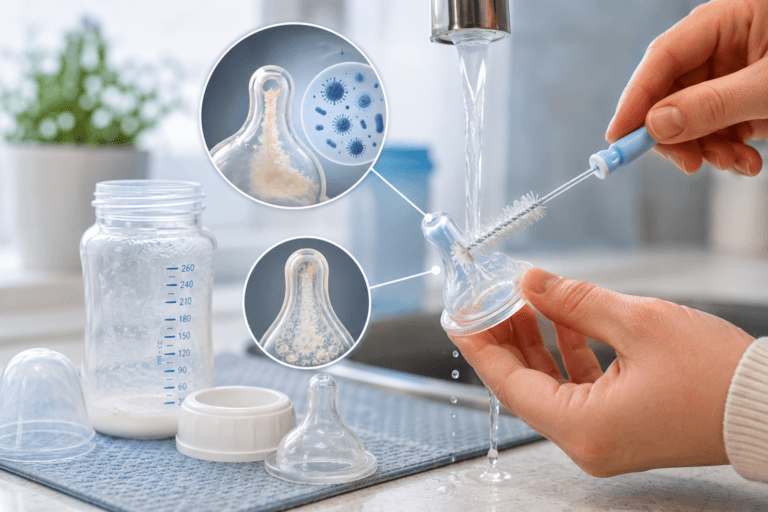
Cleaning and sterilizing solve two different problems, and a newborn’s feeding equipment needs both. Cleaning physically removes milk residue, milk film, formula buildup, proteins, fats, and visible deposits from a bottle, nipple, or pump part. Sterilizing goes a step further and reduces the microorganisms — bacteria and germs — that a wash alone can’t fully eliminate, even when the bottle looks spotless.
This distinction matters most in the first few months. A newborn’s immune system hasn’t yet built up the defenses an older baby or adult has, so residue that would be harmless to a toddler can be a real risk to a one-month-old. That’s why most pediatric guidance recommends sterilizing feeding equipment regularly for young infants — commonly through their first two to three months, or more often if a baby was born premature or has a weakened immune system — while continuing thorough cleaning after every single feed for as long as bottles are in use.
Golden Routine:
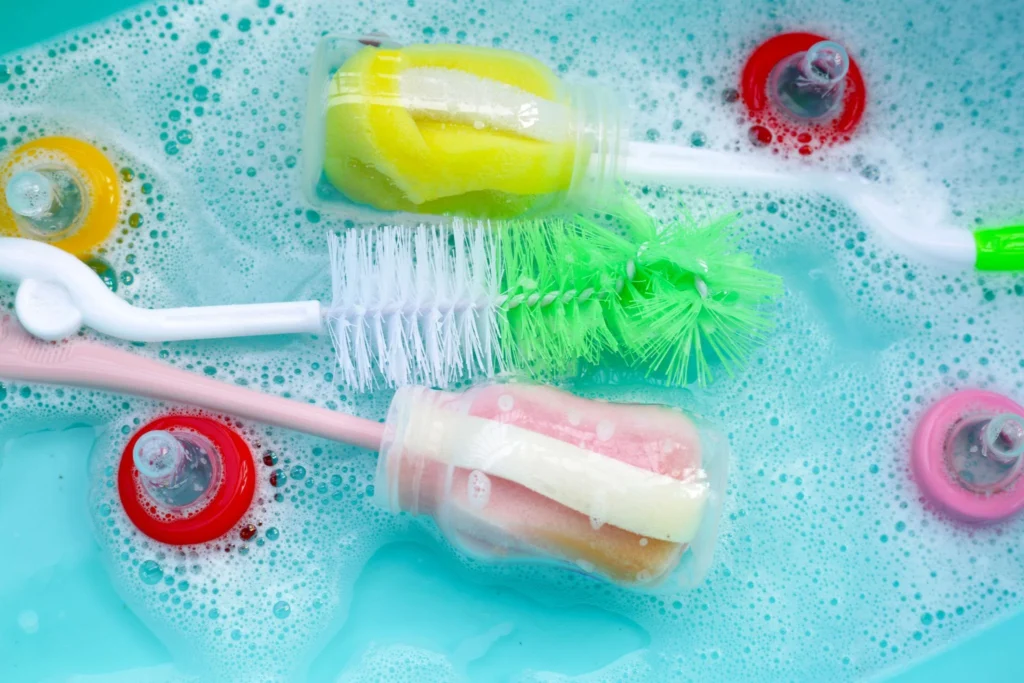
- Clean after every feed: disassemble the bottle fully (body, nipple, collar, valve) and wash each piece with a dedicated bottle & nipple cleanser rather than regular dish soap, which can leave a chemical residue that isn’t meant for something a baby puts in their mouth.
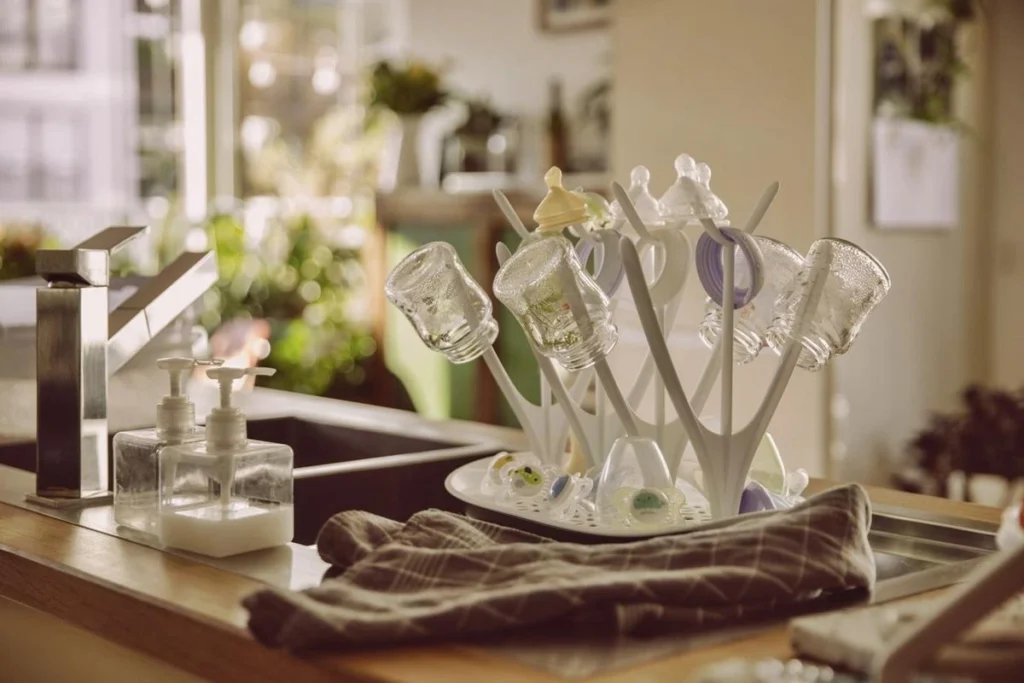
- Sterilize on a regular schedule for young infants: boiling, steam sterilizing, or a sterilizer bag/microwave method all work — the method matters less than doing it consistently. Inspect before reassembling: check nipples for any cloudiness, cracking, or leftover film, since these are signs a piece isn’t fully clean or needs replacing.
A cleanser alone is not a substitute for sterilizing, and boiling alone is not a substitute for cleaning — residue left behind by skipping the cleaning step can actually shield bacteria during sterilizing. Doing both, in the right order, is what actually keeps a newborn’s feeding equipment safe.
Shop Now ! Keep Baby Clothes Fresh Every Wash Looking for a gentle detergent that’s tough on stains? 👉 Discover Super Mom Baby Laundry Detergent. Facebook Instagram Tiktok Browse Recent Articles
How to Remove Baby Formula Stains from Clothes (Without Damaging Fabric)
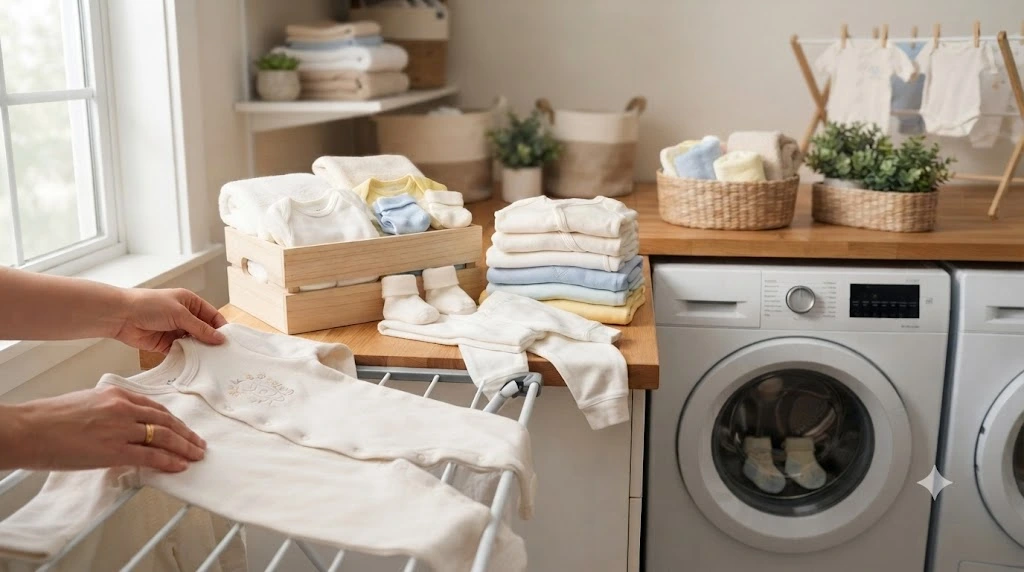
How Wash Newborn Clothes for the First Time
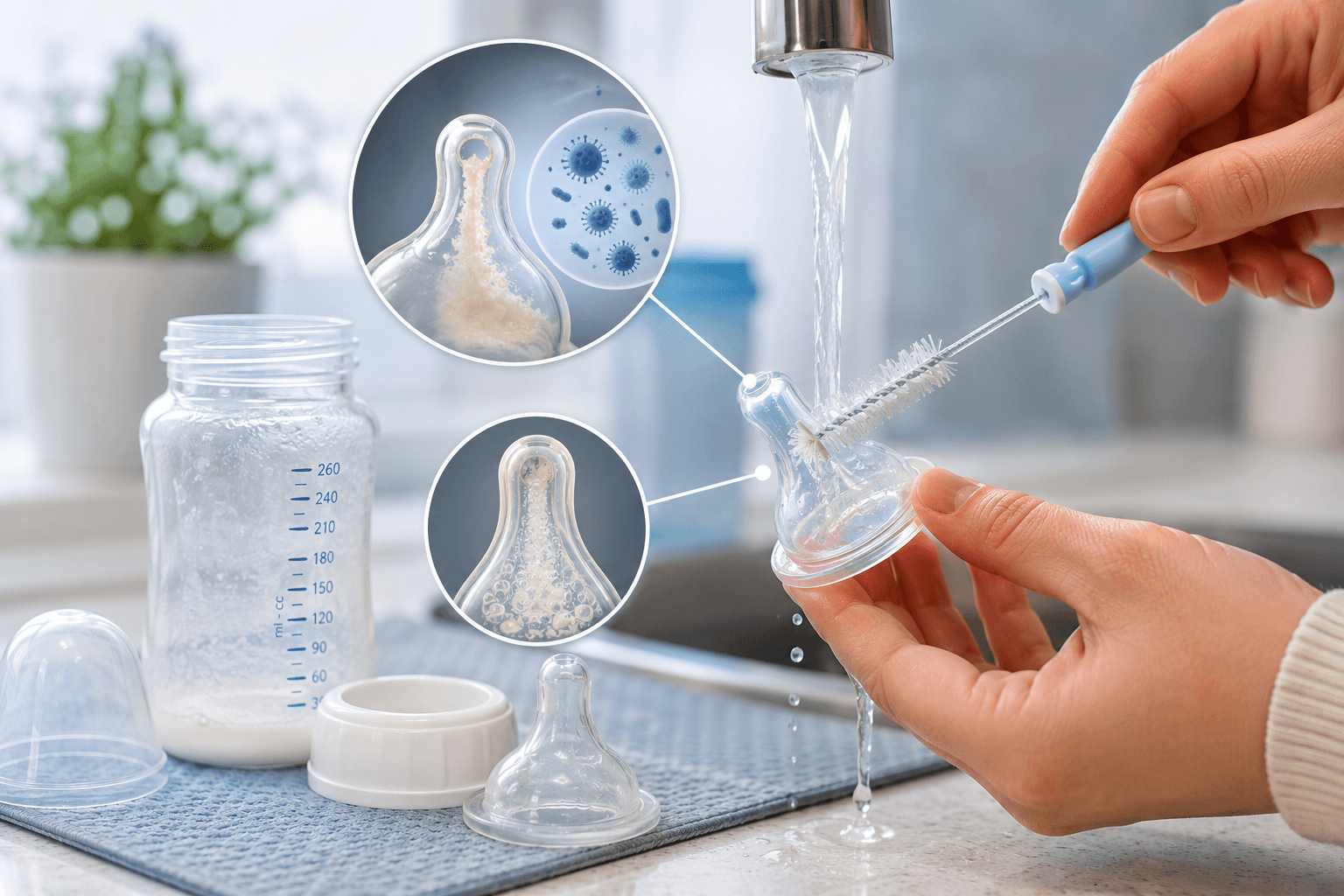
Why Bottle Nipples Are the Hardest Part to Clean Properly?
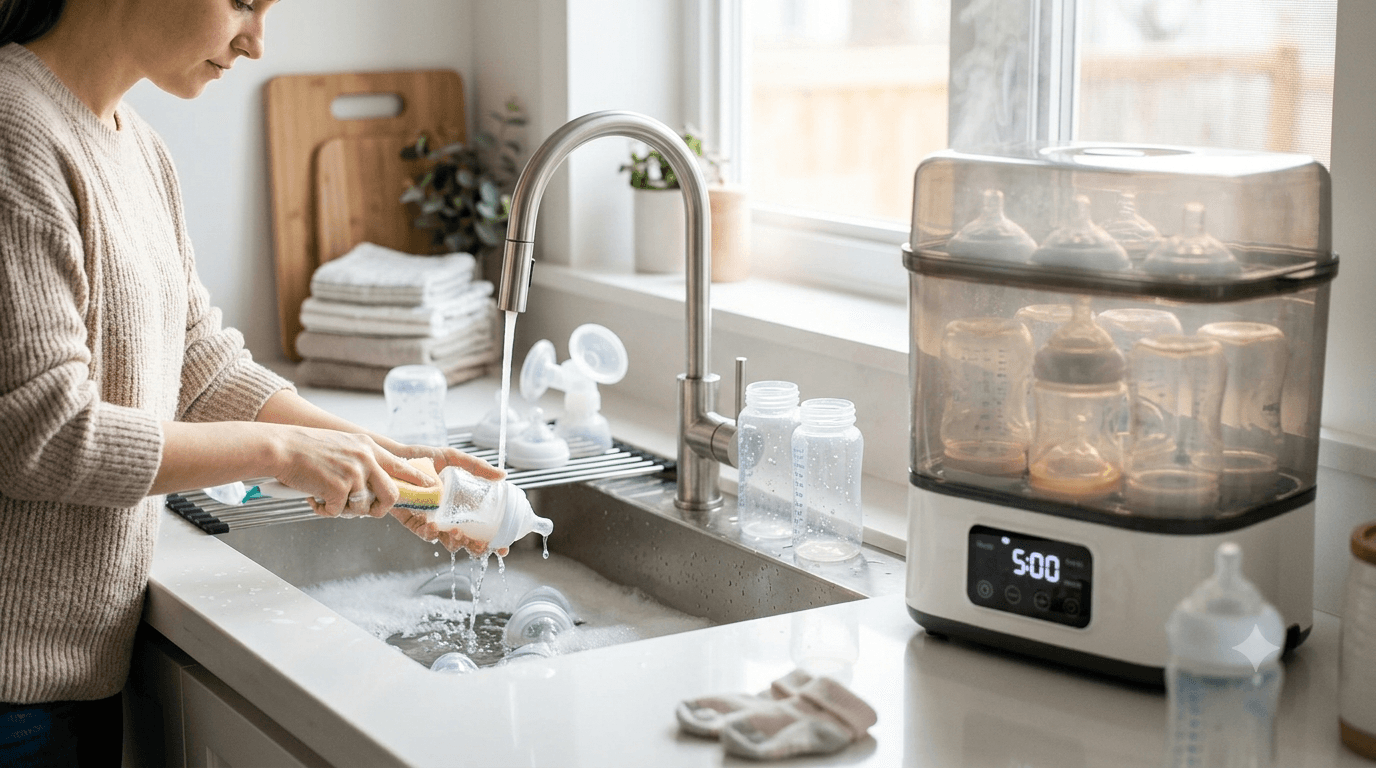
Cleaning vs. Sterilizing Baby Bottles: What’s the Difference?