How to Remove Baby Formula Stains from Clothes (Without Damaging Fabric)
BySuper Mom Editorial Team··1 min read
Say Goodbye to Baby Formula Stains: Effective Tips for Soft, Clean Clothes
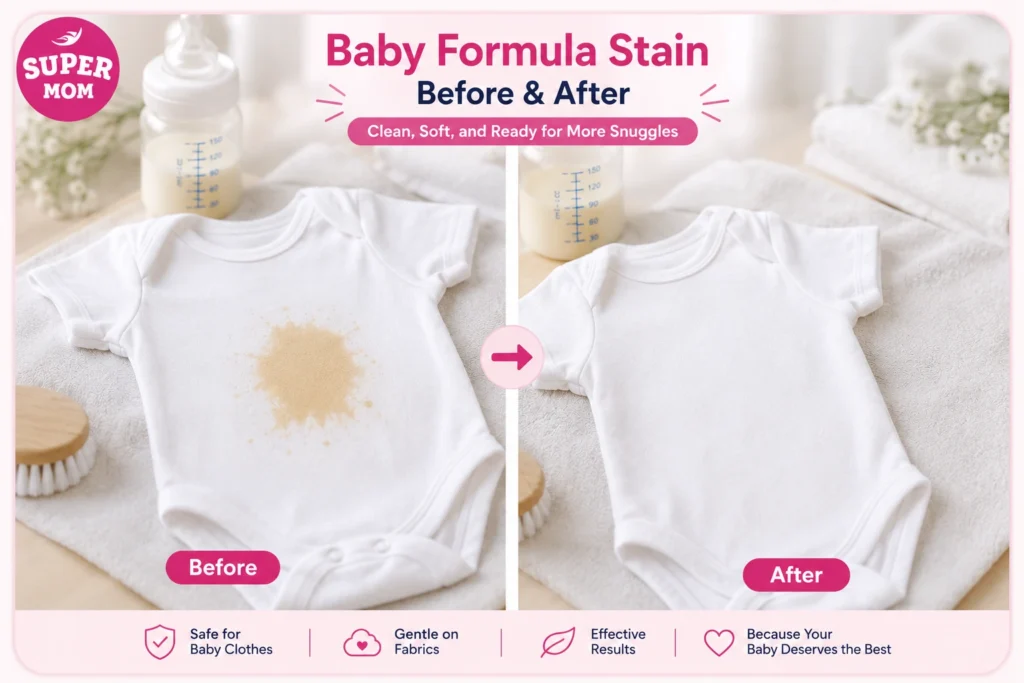
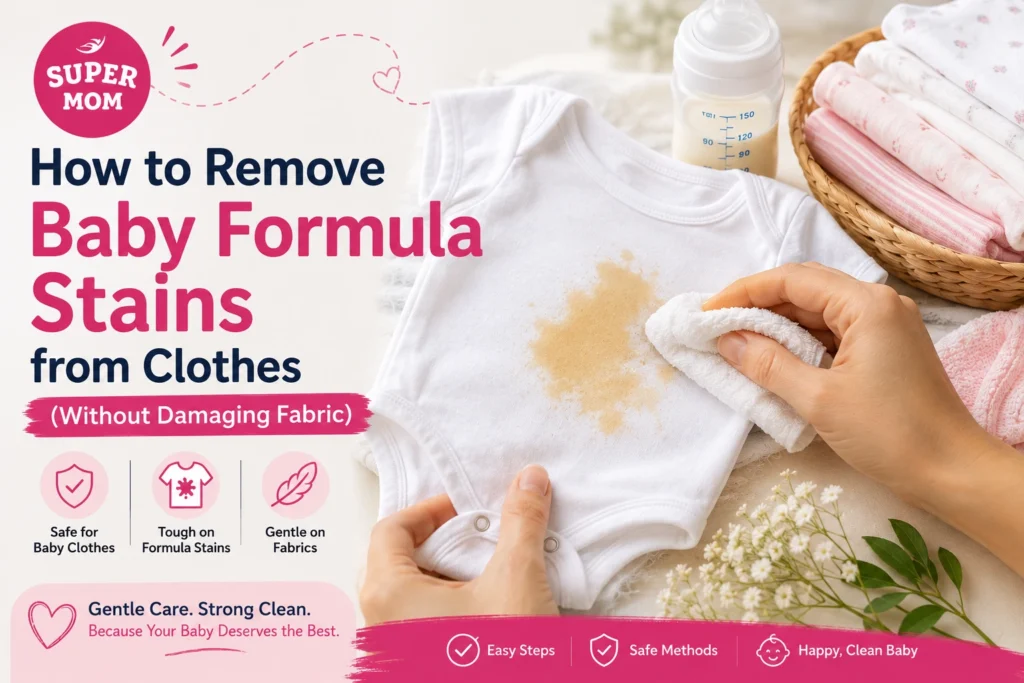
Baby formula stains may look harmless, but if they’re left to dry, they can become stubborn stains that are much harder to remove. The good news? With the right approach, you can clean baby clothes effectively while keeping delicate fabrics soft and safe.
Why Formula Stains Are Difficult to Remove ?
Baby formula contains proteins, fats, and minerals that can bind to fabric fibers as they dry. Hot water or harsh detergents may set the stain even deeper, making it more difficult to remove completely.
Step-by-Step Guide
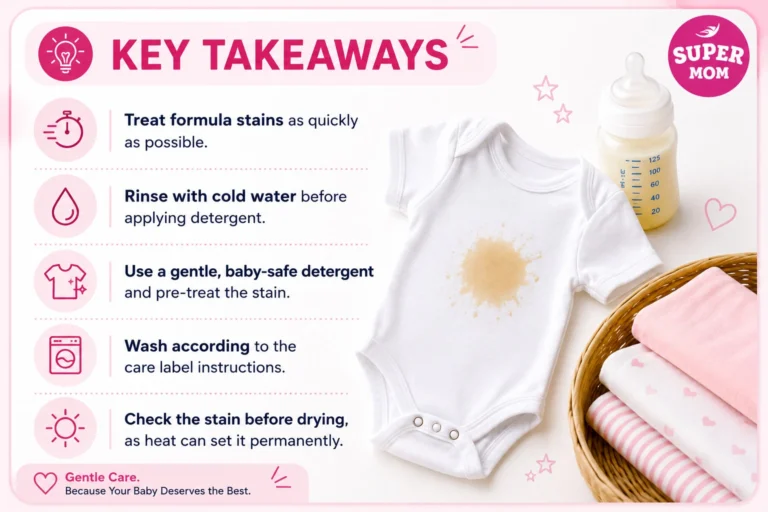
1. Remove Excess Formula
Use a clean cloth or spoon to gently remove any remaining formula without rubbing it deeper into the fabric.
2. Rinse with Cold Water
Turn the garment inside out and rinse the stained area under cold running water for a few minutes.
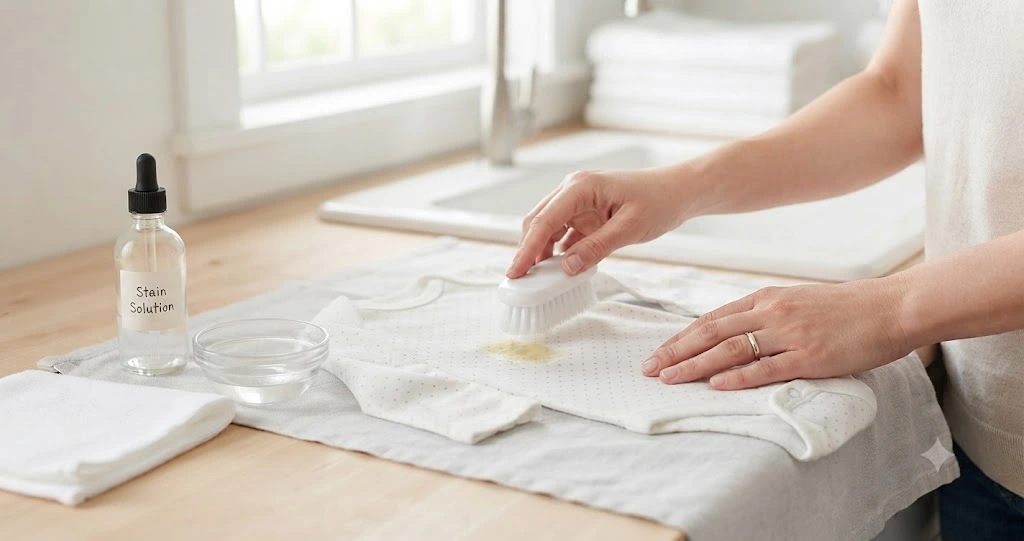
3. Pre-Treat the Stain
Apply a gentle baby-safe stain remover or baby laundry detergent directly to the stain and let it sit for 10–15 minutes.
4. Wash as Directed
Wash the garment according to the care label using a mild detergent designed for baby clothes.
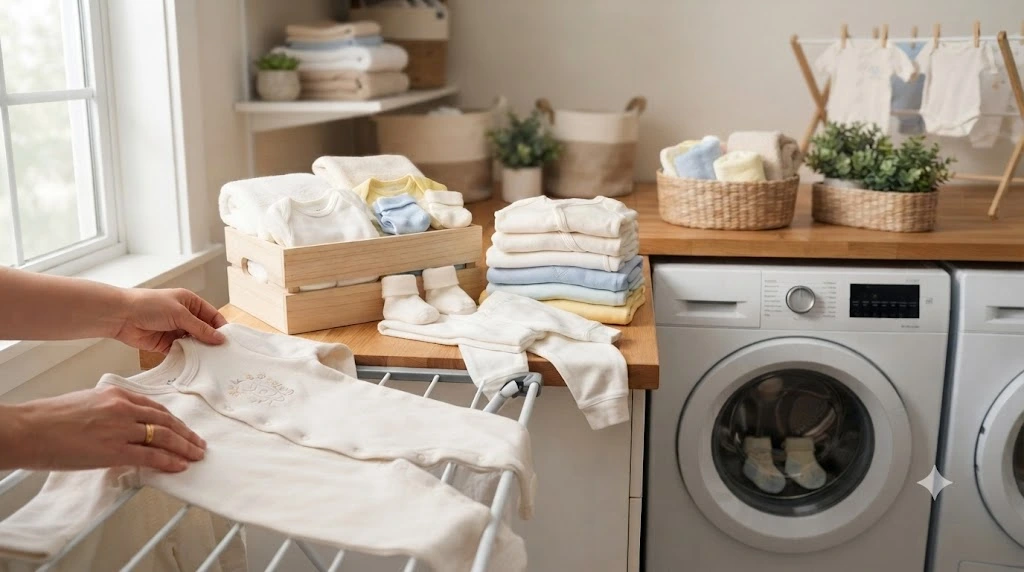
5. Air Dry First
Before using a dryer, make sure the stain is completely gone. Heat can permanently set any remaining residue.Quick Tip: Never use bleach or harsh chemicals on baby clothes unless the care label specifically allows it.
Say Goodbye to Baby Formula Stains: Effective Tips for Soft, Clean Clothes Baby formula stains may look harmless, but if they’re left to dry, they can become stubborn stains that are much harder to remove. The good news? With the right approach, you can clean baby clothes effectively while keeping …
Why Should You Wash Newborn Clothes Before First Use? Every new item of baby clothing, blanket, and swaddle should be washed at least once before its first use—even when labeled “pre-washed.” Manufacturing dust, packaging residues, and handling during shipping can remain on the fabric, potentially irritating your baby’s sensitive skin.The …
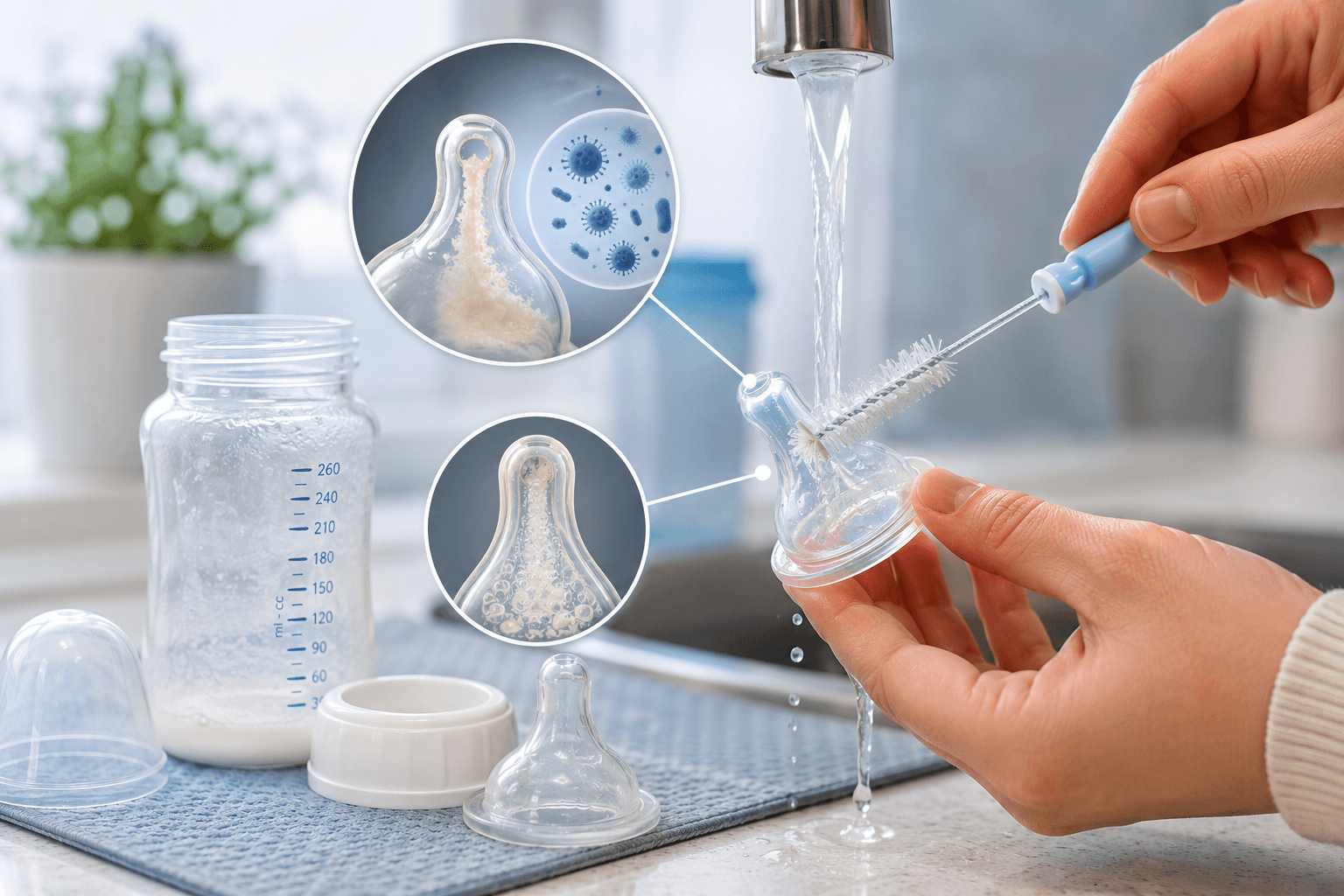
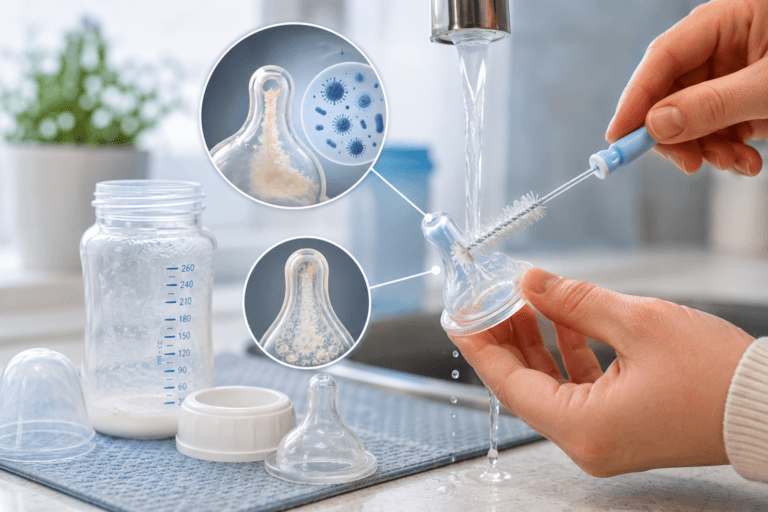
Why Bottle Nipples Need Extra Cleaning Attention Bottle nipples are the most challenging part of any feeding setup to sanitize because their soft folds and internal valves are designed to control milk flow—a design that unfortunately traps milk film that a quick rinse often misses. Unlike the smooth bottle body, …
Cleaning and sterilizing solve two different problems, and a newborn’s feeding equipment needs both. Cleaning physically removes milk residue, milk film, formula buildup, proteins, fats, and visible deposits from a bottle, nipple, or pump part. Sterilizing goes a step further and reduces the microorganisms — bacteria and germs — that …
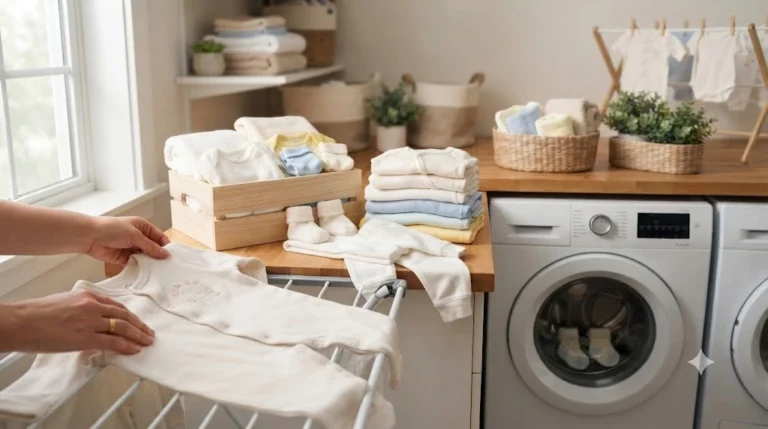
Mother cleaning baby clothes before cleaning After Cleaning The Clothes The Secret to Choosing Baby Laundry Detergent: A newborn’s skin is thinner, more sensitive, and less able to act as a protective barrier than adult skin—which is why the fragrances, dyes, and concentrated surfactants in regular laundry detergent can irritate …
brand founded in 2019. Our team creates evidence-based articles, practical guides, and expert-backed resources to help parents maintain safe baby feeding hygiene, proper bottle and breast pump cleaning, effective baby laundry routines, and healthier everyday baby care practices. Every article is carefully researched to provide clear, reliable, and easy-to-follow advice that supports families from a baby’s first days onward. Our mission is simple: to combine trusted education with innovative cleaning solutions that help parents care for their little ones with confidence. Helping Parents Clean With Confidence™.